The Mortar Method

No blender has ever touched this basil.

Here's the mortar, and the order it goes in. Six steps. Sixty years. The same marble bowl every morning before service.

01
The Basil

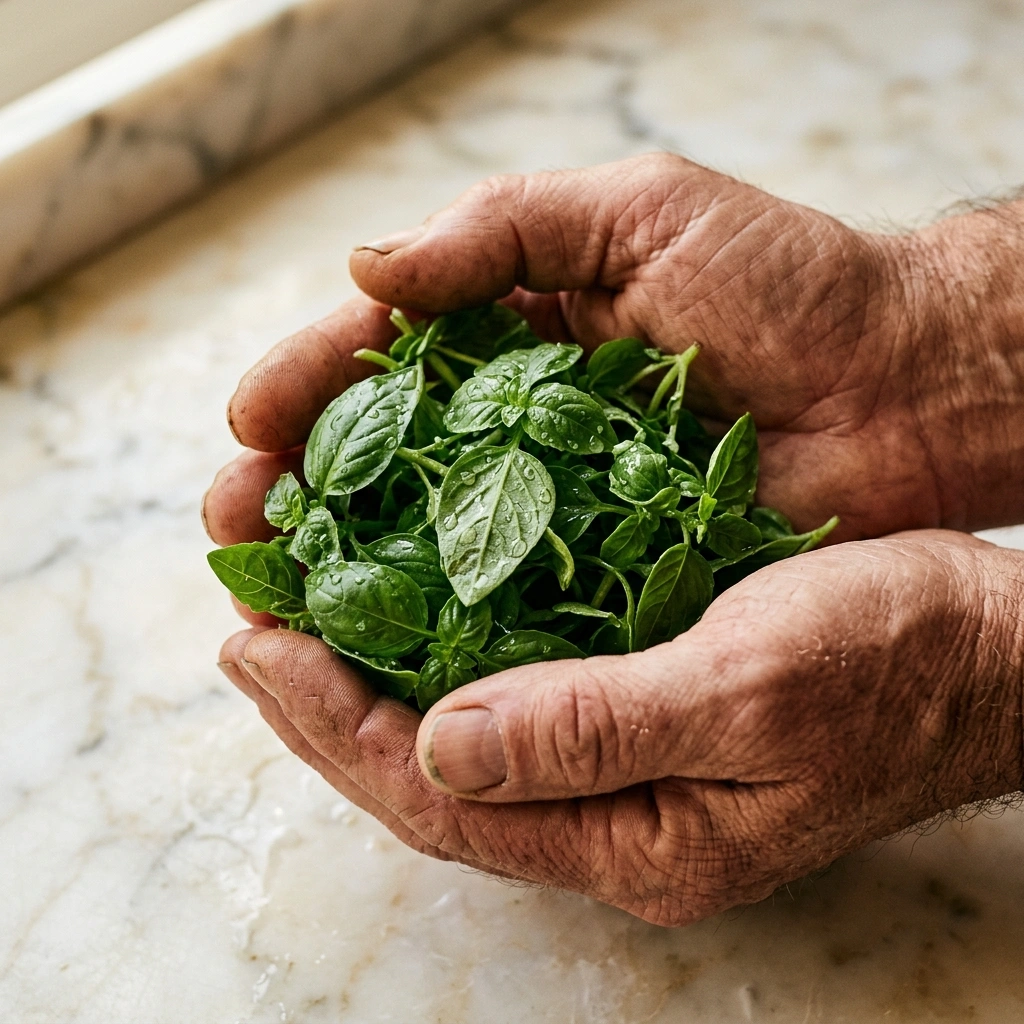
Small-leaf Ligurian basil only — large-leaf turns bitter under the pestle. Pick it the morning of service, never the night before. Rinse in cold water and pat dry without bruising.

Hands holding freshly picked small-leaf Ligurian basil
02

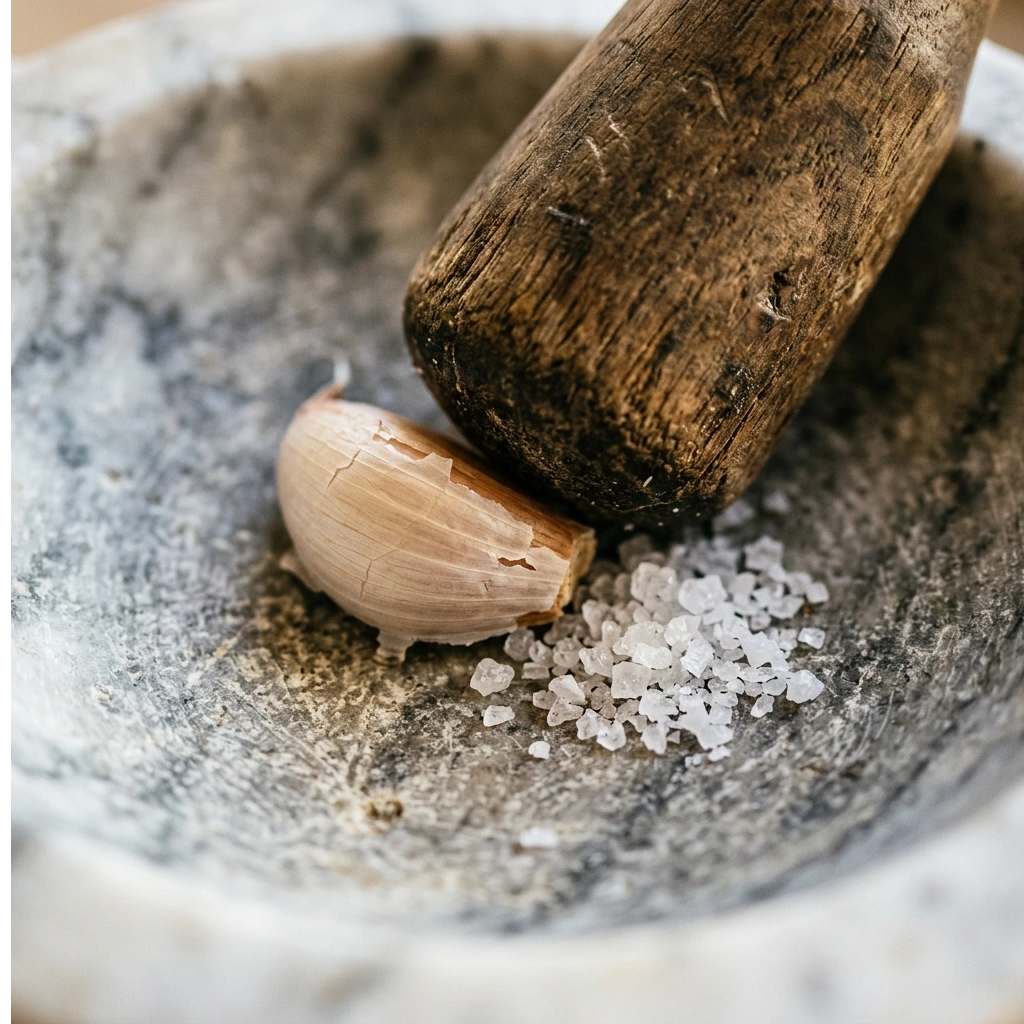
The Garlic

One clove per batch, no more. Pound it first with a pinch of coarse salt until it becomes a smooth paste. This is the base everything else builds on.

Garlic clove and coarse salt in a marble mortar
03

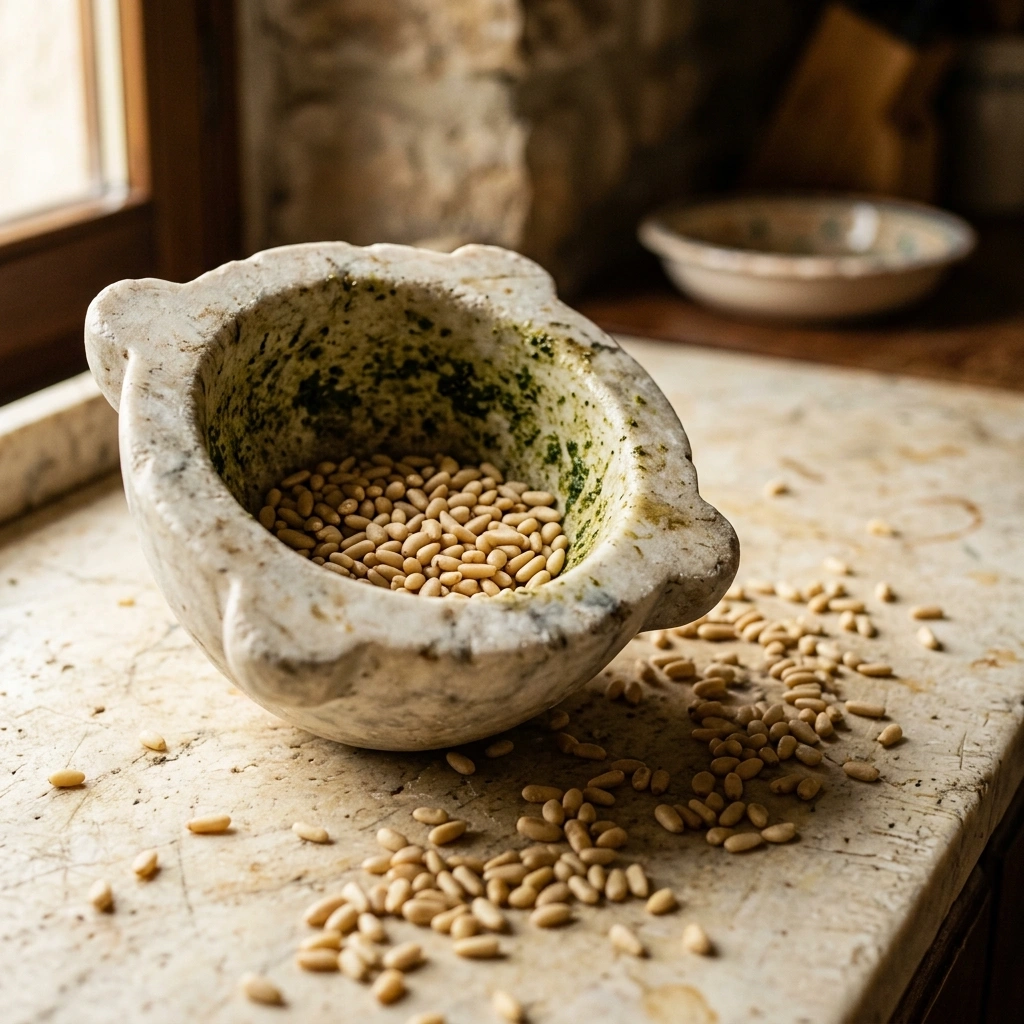
The Pine Nuts

Add the pine nuts and pound into the garlic paste. How many? The family has argued this since 1982 and we are not settling it here. Add them and pound in a circular motion against the walls of the mortar.

Raw pine nuts in and around a marble mortar stained with pesto
04

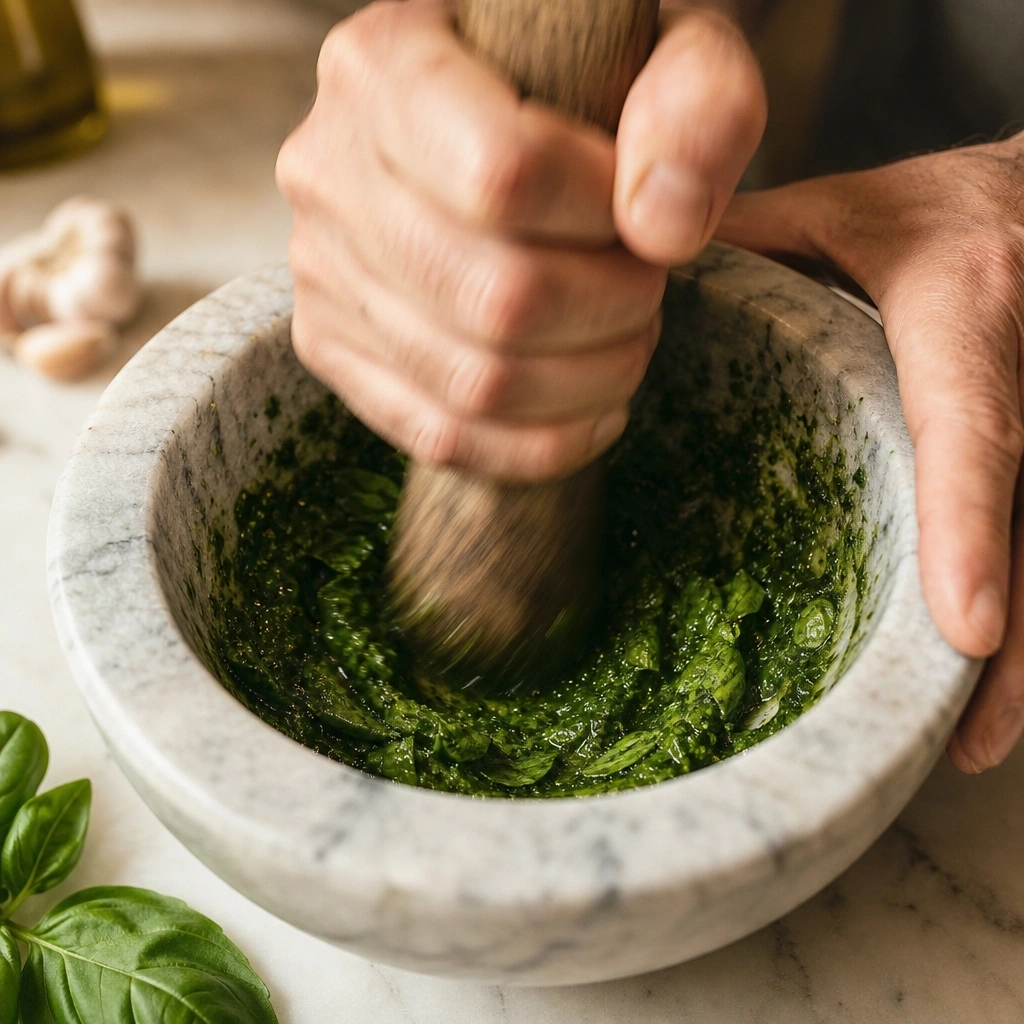
The Basil Goes In

Add the basil in batches, pounding in a circular rhythm. Press and rotate — never chop. The marble stays cold, the oil stays green, the basil stays sweet. A blender heats the oil and blackens the leaf.

Pounding basil in a marble mortar and pestle
05

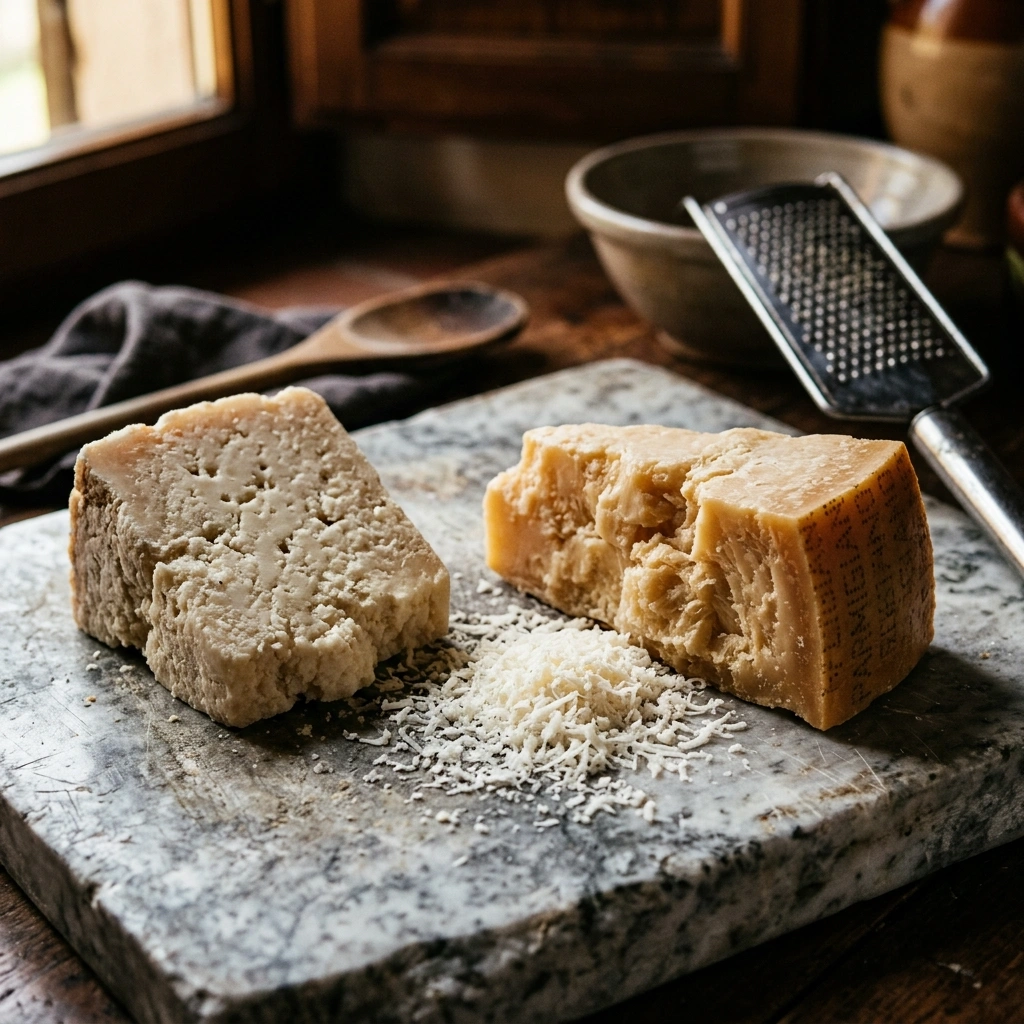
The Cheeses

Grate and fold in pecorino sardo and parmigiano reggiano. The ratio is contested. We use more pecorino. Nonna uses less. You will decide.

Aged pecorino and parmigiano wedges with fresh grating on marble
06

The Oil

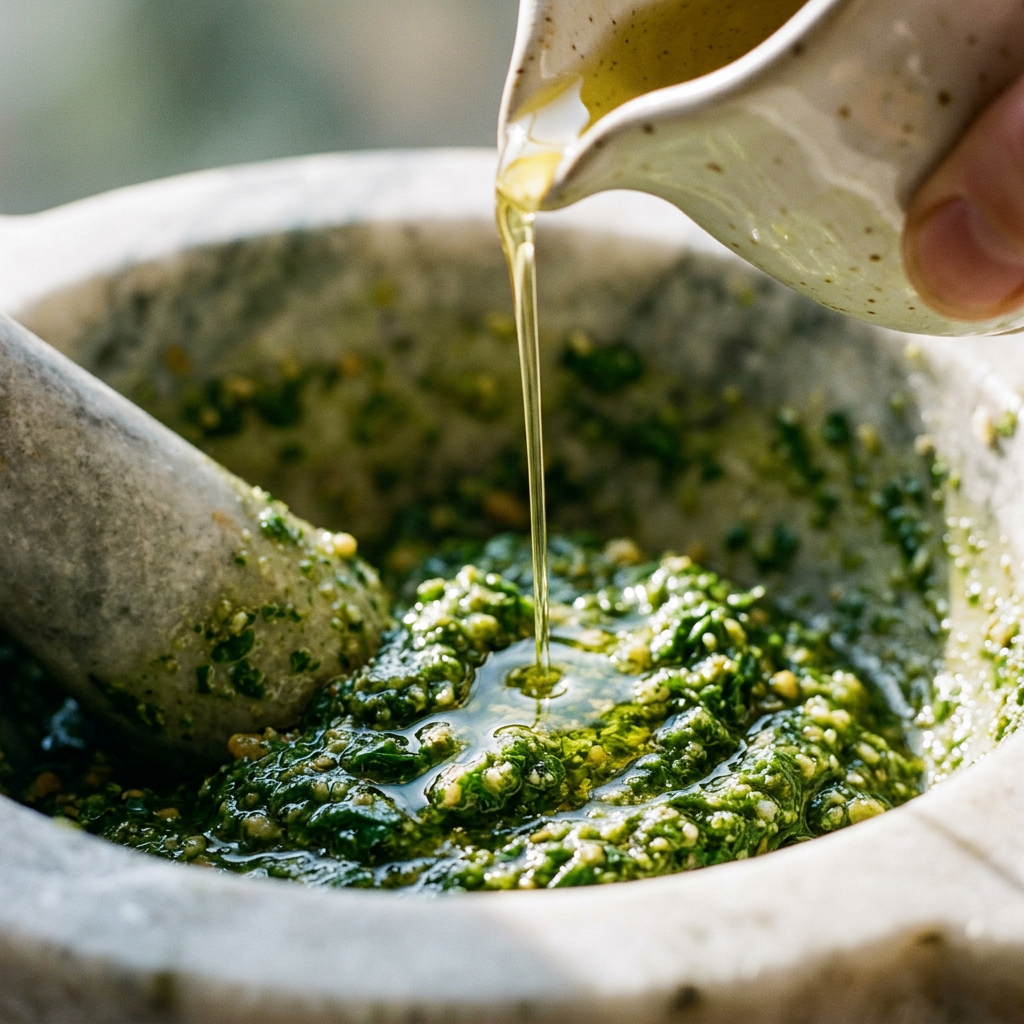
Drizzle Ligurian extra virgin olive oil slowly, folding with the pestle as you go. The pesto should be loose enough to coat the pasta but thick enough to cling. Adjust with a spoon of pasta water at the end.

Olive oil being drizzled into pesto in a mortar

The One Rule

"Pesto is not a sauce. It is a stance. The mortar is not a tool. It is a position. Anyone who disagrees can cook for themselves."

— Nonna Giulia, 1962, and every day since

Come taste the argument.

Book a Table
Pesto Politics Genova · Est. 1962
Book a Table